

Gas Composition and Calorific Value Analysis for Marine BOG Recovery
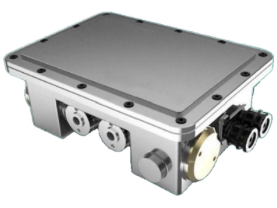
The T1000™ natural gas analyser continuously monitors fuel gas quality and composition in demanding marine conditions. It is straightforward to install and operate, makes real-time analysis available without frequent routine checks, and supports remote monitoring and servicing.
Why measure fuel composition?
LNG engine performance depends on the gas mixture. Calorific value and methane number change over time, and LNG quality varies between bunkering facilities. As fuel is consumed under different weather and operating conditions, its actual quality cannot be predicted reliably without real-time composition measurements. These variations affect engine performance, fuel economy, load selection and operating forecasts. The T1000™ addresses them through continuous gas analysis.
Engine control
With live measurements of fuel quality and mixture composition, operators can choose the optimum engine load. For example, running two engines at high load instead of three at low load can improve fuel economy and reduce engine hours and maintenance costs. Continuous readings of methane number, calorific value and composition help prevent knocking and misfiring before a separate detection event. Better control also reduces or eliminates unnecessary changeovers to diesel, improving fuel efficiency and operating economy.
Data for operating decisions
Real-time monitoring captures rapid changes in fuel composition. Combined with analytical software and equipment condition monitoring, gas data give operators the information needed to adjust operating parameters. Reliable composition data are transmitted quickly and are accessible remotely. Fuel consumption can be monitored and recorded in real time. The T1000™ provides continuous data, 24 hours a day, seven days a week.
Measurement and service
The T1000™ uses microelectromechanical systems (MEMS) technology to provide a rugged, compact alternative to other analytical systems. It uses infrared absorption spectroscopy, continuously scanning a broad band in the far-infrared spectrum for fast, accurate analysis of the gases of interest. Its continuous, rapid response supports real-time engine optimisation. A data link enables remote monitoring from the bridge, control room or shore.
Compared with gas chromatography, the T1000™ gives a faster response because it does not need to separate the gas components. It requires no frequent recalibration or maintenance and avoids consumables such as reference gas cylinders and their associated handling requirements. Service and maintenance can be performed remotely. The analyser helps operators maintain performance and fuel economy, monitor equipment health, lower overall maintenance costs and improve operating efficiency.